Blog


Cardboard Alligators
Are you a sucker for a recycled art project like me? If so well then you’re in the right place! I am so excited to share with yall these adorable cardboard alligators my 1st grade students just completed! Let’s chat about how we made them, shall we? Secure your Cardboard Ok so truth be told, I didn’t go seeking out this alligator project- the materials actually came to me! One of my coworkers mentioned that the IT department had tons and tons of these cardboard dividers that came in the iPad delivery boxes and had asked if anyone was interested. Once we saw the shape of the cardboard inserts, my teammate, Katy and I’s brains started spinning! Once one of us mentioned that the shape kind of resembled an alligator that was it- we had to make alligators! They were too perfect. If you don’t have this exact shape I’m sure cardboard egg cartons would be an easy swap! Make it stand out Check out our attempt to transport all of these pieces of cardboard through the parking lot to our cars without a spill! Lots of laughs were had in this silly scene! 2. Mix your Green Definitely one of the best parts of this project was allowing my students to mix blue and yellow to make their own specific shade of green. To make the paint nice and opaque I added a bit of white to the yellow and blue paint before passing it out so that they would stand out nicely against the brown cardboard. I always instruct students to start with the lighter color first (yellow) and then slowly add the blue in until the preferred shade of green is achieved. I absolutely loved seeing the variety in their greens at the end of this painting day. 3. Bubble Wrap Printing!!! Every kids’ favorite thing to do! And what’s not to love? On this day of the project we spent a lot of time talking about texture, comparing the texture of alligators vs. crocodiles. We knew we definitely needed texture on our gators and bubble wrap seemed like just the ticket! I gave each student a 5x5 ish square piece of bubble wrap, as well as a piece of dark green construction paper to print on. Students used Crayola yellow fluorescent paint cut with a bit of white to paint the bubble wrap and then print on their green paper. Once their green paper was filled, students printed the “body” of the gator on the cardboard which was essentially just the top of the sculpture. We allowed all piece of cardboard and paper to dry. 4. Tail and Snout Now it’s time to take that extra green piece of paper and create your details for your alligator. You will definitely be cutting the snout and tail out from this paper, but depending on how much space is left- maybe not the legs. It’s up to your students! Cut the printed green paper in half vertically, one side will be for the tail and the other for the mouth. I rarely ever use tracers so instead, I have my students measure a 4 finger width for how wide their tail should be at the base. Then on the opposite end of the long piece of paper, they find the middle with a dot, then connect the lines to make a large, long triangle. One your second green paper strip, fold it in half like a book- this will be the open snout of the gator. Again, have students measure the width of 4 fingers on the folded side of the paper, draw a large long rainbow or V shape (for a crocodile) and cut it out so that you have a mouth that opens and closes. Use red paper to cut out a “U” that is smaller than the mouth and glue it inside, then use white colored pencils or crayon to draw all those alligator teeth! For added details, use green scraps to draw and cut out two small “U” shapes for nostrils. Draw them as wide as the tip of your finger and then fold the flat part over just a bit to create a flap. Using a sharpie, draw another (slightly smaller) “U” on the shape and color in. 5. Legs, Eyes and Spikes, oh my! Legs: Using either scrap pieces of green bubble printed paper or just plain green construction paper, have students fold a small piece of paper in half (hot dog style) and draw a leg. I have the students make sure their leg is at least 2 fingers wide with a zig-zag line for toes. Cut out the leg, which will double into two because the paper was folded. Take another piece of green paper, trace the leg you just made as a template and cut out two more legs. Glue legs to sides of alligator, but be sure to have students hold for at least “20 alligator seconds” for some grab time. Eyes: Ok, so on my original example, I used a ping pong ball that I had cut in half with an X-acto knife… and quickly realized how unrealistic it would be for me to find the time to cut all these ping pong eye balls for 200 first graders. So, enter- model magic! SUCH a better solution! If you have never used model magic before, it is SO much fun- and the best part about it is that it is there is NO MESS! Hooray!! Give each student a small packet of white model magic and have student split the packet in half. Reserve half of the pack for spikes ( we will do those in a moment). Split the original amount in half again and roll each piece into a ball. Model magic is amazing and will stick to surfaces while it’s malleable, so place each of the spheres on the cardboard for the eyes. Once the model magic has hardened the following week, you can take a sharpie and draw the gators’ pupils. Spikes: Using the remainder of the model magic, flatten it out to make a slab. Then, take a yellow washable marker and color right onto the model magic, covering as much of the surface as possible. Then take a blue marker, and make blue dots all over the yellow. Pick up model magic and begin to work the materials in your hands so that you see the yellow and blue starting to swirl together to make… you guessed it… GREEN!!! If the green is pretty light, feel free to repeat this process over and over to mix the shade of green your students would like. Once the green is mixed, pinch off small amounts of model magic and form into small triangles. Add a dot of Elmer’s glue underneath and then place them in a row along the spine of the gator. Repeat to make as many spikes as desired Bonus Step: If you have it, have students add a bit of blue cellophane down around the base of the alligators for added shine and fun! I had students first cut a piece of cellophane into two long strips, add a line of glue into the base of the cardboard and then tuck the cellophane in on each side, wrapping it around. Honestly this has been one of the kids’ favorite projects and I couldn’t agree more! So many fun processes all wrapped up into one! If you give some variation of it a whirl, be sure to tag me on Instagram so I can see! Have fun!
Learn more
Home For the Holidays Art Lesson
My students have been on a BIG winter homes kick per our last Winter Village lesson. So I decided to encourage them to take their imaginations a step further and give them the opportunity to create the interior of a winter home all decorated for the holidays. Now, in full disclosure, I actually came up with this lesson as a sub-plan because of some unexpected child care issues that popped up for us (eh hem- gotta love those 10 day exposure quarantines). ANYWAY- I created this lesson while I was prepping to be out, and the students did such an amazing job that I decided to keep going on when I returned to school! The lesson is super easy and incredibly engaging for students of all ages! Let me share with you how we made these adorable, cozy and interactive homes! Before starting the actual project, I recommend reading a book talking about different and diverse family traditions. I love this blog by Brightly sharing tons of different book recommendations. I also would recommend the book Windows by Julia Denos or Home by Carson Ellis. Ask your students about what holidays they celebrate in their home and what kind of traditions they have surrounding those holidays. Materials: Construction paper (11 x 17 if you’d like a bigger house or 9 x 12 for a smaller version). I used Astrobrite paper for my example shown, but my students used Tru Ray construction paper A pencil and washable markers to draw with. (Washable is important here because you do not want your marker to bleed through the paper). I used Posca paint pens to draw my example while home Construction paper crayons or high quality colored pencils (Prismacolor shows up amazing on darker paper) Winter Village Drawing Guide and Interior Spaces Reference sheet. Both are available on my website or TPT store. Step 1: paper in half horizontally. This helps to find the middle of the paper. Then fold each side into the centerline. Step 2: Cut off the corners of the folds for the roof. Step 3: Draw the outside of the house using a washable black marker. For ideas and inspiration, provide students with Winter Village Drawing Guide. Step 4: Open “doors” of the house and begin drawing the inside of the house! Students can choose to draw the inside of their home as one large room or they can divide it up into multiple rooms. Students can draw elements of their real home or create a new space of their own… their DREAM house! If this lesson is being done around the holidays encourage students to add a bit of their holiday celebrations and traditions to their homes as well. This was one of my examples in which I left for my students. This example showed what a house could look like if you chose to divide it up until many rooms. Step 5: Color in construction paper crayons or Prismacolor pencils. Higher quality colored pencils like Prismacolor show up incredibly opaque and bright on construction paper- but they are a bit pricey. So I highly recommend construction paper crayons as a cheaper alternative! This lesson is so fun and easy and the perfect project to get us through the last few days til winter break! I hope you and your students enjoy! Have fun! Happy Creating!
Learn more
Charming Winter Village Drawings
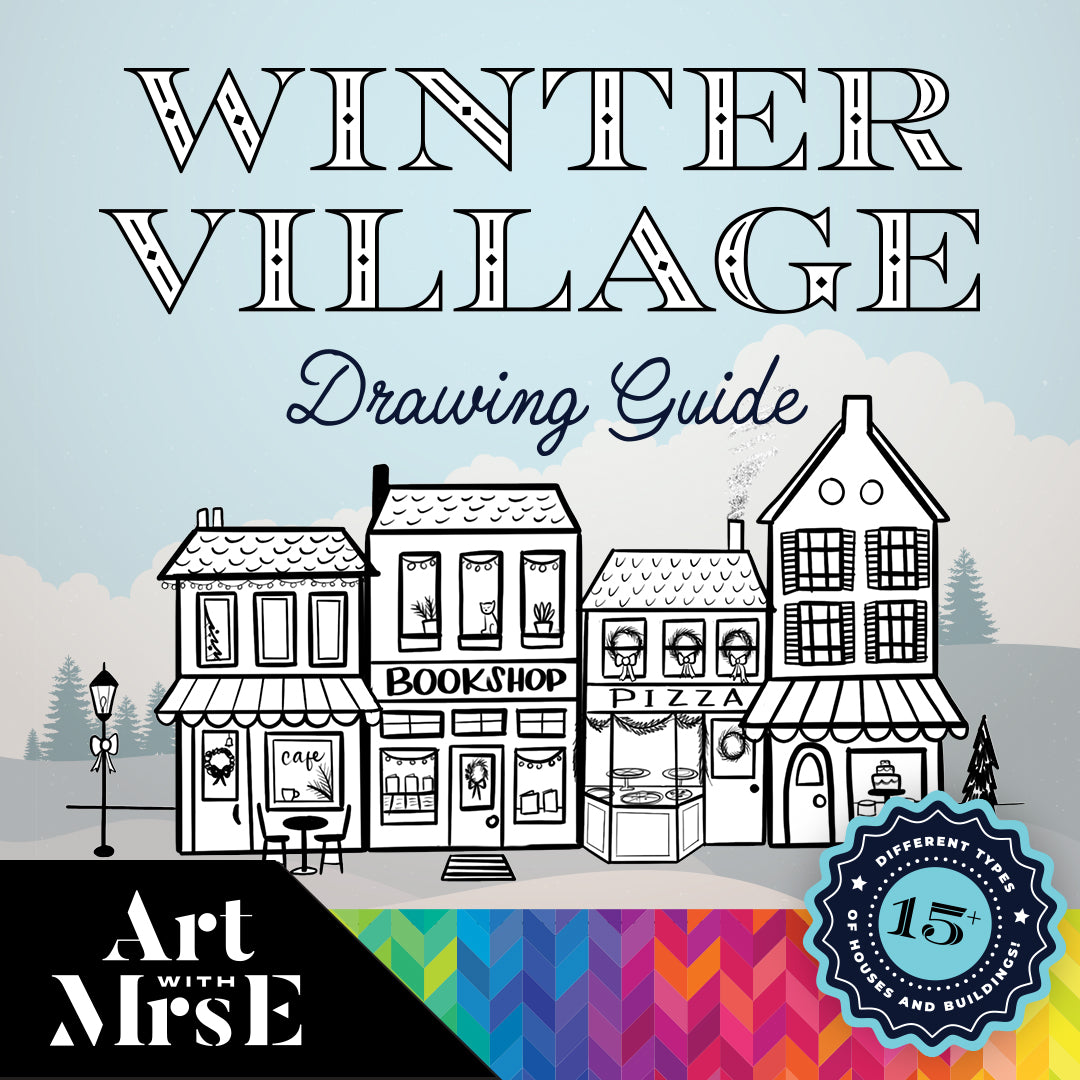
Looking for an engaging winter art project that your students will truly love? This Winter Village drawing lesson is a cozy, low-prep art project perfect for elementary art classrooms, combining storytelling, drawing skills, and creative choice. Inspired by children’s literature and designed to build confidence, this winter art lesson helps students move beyond simple house drawings to create charming, detailed villages full of personality and imagination.
Learn more
Winter Village Window Painting
Spread joy around your school by painting a simple winter village on the windows! It’s the most wonderful time of the year… window painting season! Or at least that’s what I say! This has been a little tradition I started all the way back my first year teaching in 2008 (😳). For me, painting the windows is such an easy way to spread joy to others. Not only is it incredibly relaxing to do as an artist, but be prepared to hear the “Ooos and Ahhs” as students and staff walk by admiring your window painting. I’ll never forget one of my students coming up to me at the end of the day and saying “Mrs. Edington, I was watching you paint those houses from my classroom and it was the joy of my day” 🥺❤️😭 Are you kidding me?? That right there is our way yall- to give kids the joy in their day! Let’s Get Started! Supplies: White tempera paint (I use Crayola Premier Tempera) Liquid hand soap (to be added to paint) Paintbrushes (soft bristle/ synthetic are best) Winter Village Drawing Guide (available in my TpT store) Adding soap to your paint can help with application and clean up! Add a bit of soap to your paint. This step is totally optional but when I shared these windows on my Instagram, the number one question I received was “WILL IT COME OFF??” Yessss yall- tempera paint is water-based and wipes right off! Sure you will have to spray and wipe a few times but it is far from permanent. Another option is to add a few pumps of soap to your paint and mix it in. This thins out your paint a bit and can make it appear a little more transparent, but when clean up comes around getting the paint off is a sinch! All you need is a straight razor blade and the paint with soap in it scrapes right off! It’s very satisfying if I do say so myself. Gather your brushes. I like using a variety of flat and round brushes of varying sized depending on the area I’m painting and the small details there are. My favorite classroom brushes are the Class Pack from Royal Langnickle (the green handles!) Print your Drawing guide and get started! Ok you guys- confession time. I have been obsessed with doodling cozy homes for years and years- just check my sketchbooks and you’ll see! So after spending the weekend in a quaint little town near us, I decided to capture the charm of the town and bring it to my students and my resources. Taking photos of all of the cute shops and homes in the town, I turned them into step by step drawing for artists of all ages to follow! You can download this guide here! Begin by painting the snow at the bottom of the window (a bumpy line) and then start painting your buildings! The more charm the better- consider adding lights, street lamps, trees, fences, feet prints and more! Whether you’re planning on painting this village in your classroom, around the school or even at home, I know that you and your little ones are sure to love it! Have fun!
Learn more
10 Must-Have Art Supplies at Home!
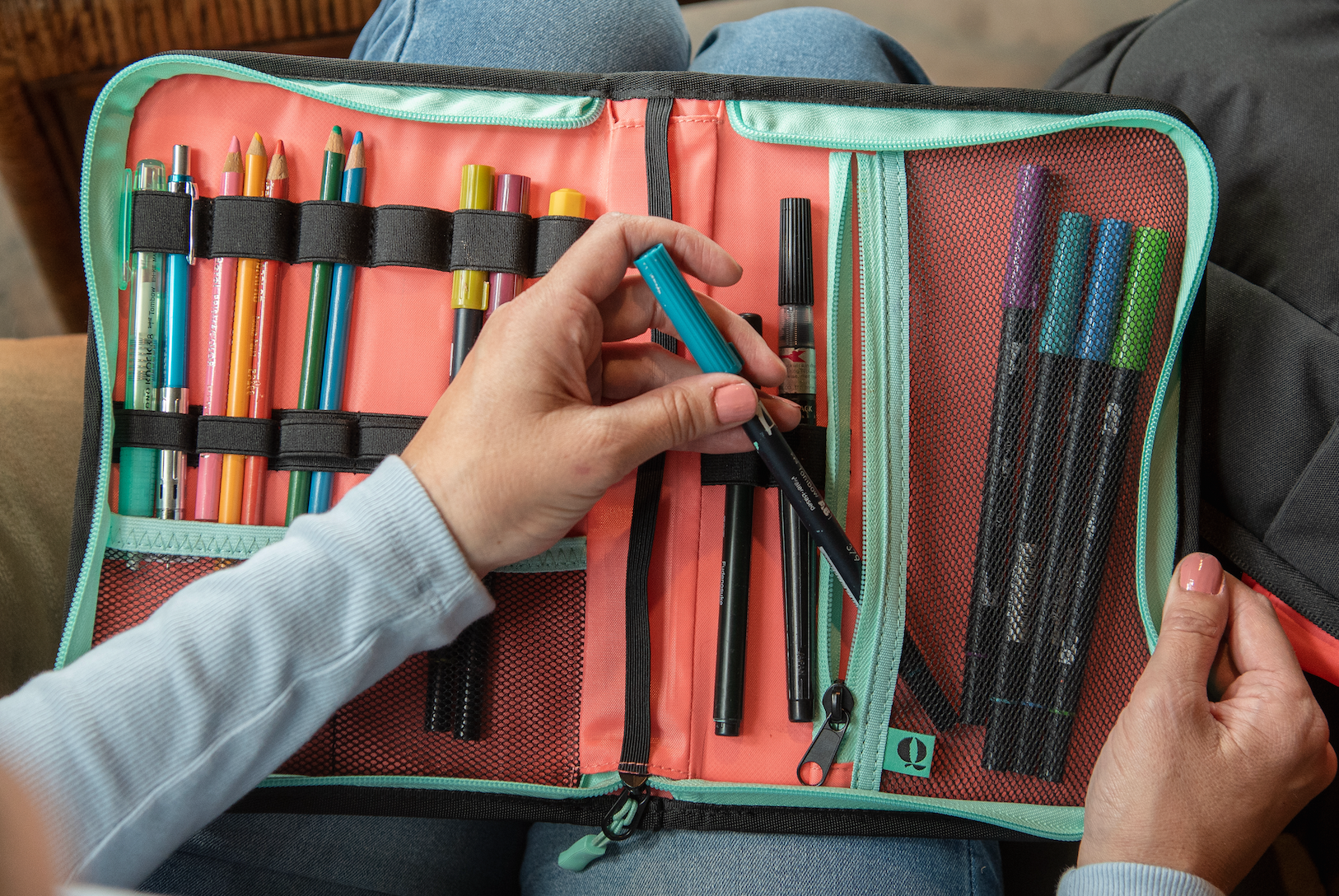
An art supply gift guide for kids ages 3-7 One of the most frequently asked questions I receive around this time of year is what supplies I recommend for young children to use at home. Well, y’all are in luck- as an elementary art teacher AND a mom of two young children (ages 2 and 5) I am here to share my favorite art supplies that my kiddos, students, and I all love! It’s worth noting that the links in this blog post contain affiliate links to supplies I love, and I hope you do too! BUY HERE OOLY Drawing Duet Markers We have gone through ALOT of drawing markers here in the Edington house and I can easily say these Ooly Double sided Duet markers are my son’s favorite to draw with! The colors are vibrant, the shape of the marker is triangular which is great for gripping and one pack comes with 24 colors! We take these markers with us everywhere! You can grab them here! BUY HERE Melissa & Doug Large Paper Roll Ok I know this looks large and in charge but TRUST ME on this. This paper roll literally saved me during the lockdown in the early stages of the pandemic. I would roll out a long piece of paper on this roll and start drawing roads, cities, speed ways, you name it! My (then 3 year old) couldn’t get enough of playing on a paper he was also drawing on! It was the best of all worlds! Kids go crazy for drawing on large surfaces and the best part about this roll of paper is that the supplies are relatively contained! When your kiddos are done you either just roll up the drawing or you can recycle it if everyone is done with it! You won’t regret this one. You can purchase this paper here. BUY HERE Kwik Stix Paint Sticks We are totally paint sticks crazy over here! There are so many amazing brands to try, but I am such a big fan of one of the originals, Kwik Stix. If you’ve never tried a paint stick, they are so satisfying to draw with and they are (relatively) less messy than traditional paint! My kids both love Kwik Stix for all kinds of art projects, especially when drawing on cardboard boxes! Grab them here! BUY HERE Arteza Sketchbook If you have been following me on Instagram for a while, you’ll know how much of a sketchbook advocate I am! I love sketchbooks for all children and for countless reasons! Two of the most important being: 1. The mess of papers is contained! Need I say more? Your child always has access to paper and their completed drawings stay nice and safely in one place. 2. This is the best way to document growth in your budding artist. As they draw in their sketchbooks their skills will naturally improve and how wonderful for them to see their own progress! I love Arteza’s 9 x 12 spiral sketchbooks for my kids! BUY HERE BUY HERE Paint Sets! There are so many great watercolors and paints but a few of my favorites to keep on hand for my own kids are these Ooly Chroma Blends Neon watercolors and Faber Castell Watercolor Set We love neons alot in this family but it’s also great to have a high quality set of traditional watercolors for your kiddos. Both of these paints are great! Faber Castell Beeswax Crayons As an art teacher I am typically tried and true Crayola crayons in my classroom, but at home we are 100% obsessed with these Faber Castell Bees Wax crayons! Why? Because they are a bit thicker / more heavy duty than typical crayons making them perfect for little ones. I also feel as though the crayon glides smoother than other crayons and I just love the plastic carrying case they come in! Perfect to throw in your diaper bag and take to a restaurant to entertain your kids. We love them! Find them here! BUY HERE BUY HERE Ooly Watercolor Gel Crayons These are SO fun! Smooth like Kwik Stix but a bit smaller and water soluble, which means double the entertainment! If you child loves to paint, you could just give them a small cup of water and a paint brush and allow them to paint over the Ooly smooth stix! You can find them here! BUY HERE Crayola Paint Brushes The quality of these really are *chef’s kiss * Different sizes and shapes with synthetic bristles- we love them! You can find them here! BUY HERE Cloud Clay from Excellerations Ok so this cloud clay isn’t exactly an art supply by my adapted art students absolutely LOVE this stuff!! Originally put on my radar by the amazing Friends Art Lab, it is the perfect squishy yet clean, and totally satisfying dough that kids of all ages go crazy for! This is definitely on our Christmas list for my own children this year! You can find Cloud Clay here. BUY HERE Canary Corrugated Cardboard Cutter Ok this supply is definitely NOT for kids but 100000% recommended by me for parents of littles to have on hand! If your children are anything like mine they absolutely LOVE cardboard boxes. With the holidays coming up and I’m sure endless packages showing up, make good use of all that cardboard by encouraging imaginative play and building! My son is so cardboard obsessed now that everyday there is even the tiniest piece of cardboard he immediately asks “Mommy, what are we going to make THIS out of today?” If you want to help make your child’s cardboard dreams come true, this tool is a game changer! With a corrugated blade, it’s kind of like a mini saw and the blade just glides through the cardboard like butter! It’s been hands down the best tool to have on hand when creating with my kiddos. You can find it here!
Learn more
Botanical Plexiglass Painting
Is there anything more satisfying than painting on glass or plastic? I think not! That’s why plexiglass is the perfect surface to keep your students engaged while painting. A few days before my adapted class while chatting with my librarian pals, I noticed an extra standing piece of plexiglass in their storage room that was currently not in use. My brain instantly started spinning thinking of potential ideas of how I could use it in the art room. My students paint and print on small pieces of individually cut plexiglass all the time, so I’m no stranger to how wonderful plexiglass is- but I was so excited to have a large piece that was vertical! Thankfully my fabulous coworkers said I was happy to borrow the plexiglass for class so that’s what I did! Photo of Lucy Tiffney working (Source https://www.sofa.com/inspiration-corner/design-lab-lucy-tiffney/ ) When trying to figure out what it is we were going to paint on the plexiglass, I suddenly remembered artist and designer Lucy Tiffney who I had started following randomly on Instagram a few years back. Lucy is an artist, muralist, and designer with a distinct painterly style of vibrant botanicals and her work is just gorgeous! With our theme this year being the rainforest, I thought that Lucy’s work would be the perfect reference for this project in adapted art. So here’s how we did it! Materials: Plexiglass soft bristle paint brushes (I love Royal Langnickle brushes of all sizes) Tempera paint (if you plan on washing it off) I use Crayola Premier Tempera paint- the fluorescent colors are my favorite! Messy Mats & Smocks Reference images of Lucy’s work and plants 1. Prepare Your Materials and Work Space Prep your paint. Lucy obviously uses many different types of greens and blues, but she also uses different pinks for a pop in her work. So I prepared lidded ice cube trays with colors from Lucy’s palette mixed with a bit of white to make the paint nice and opaque on the glass. Prep the space I prepared the tables by covering them in my large messy mats with the plexiglass in the middle and Lucy’s work on my board as reference 2. Get Them Started Before my students arrived, I painted a few of the leaves/ botanicals around the edges to show them ahead of time what will be going on the surface. This is also a fun way to invite them into the lesson- when they came in and saw this interesting glass on the table with paint on it, they were ready to jump right in! 3. Demo How to Paint the Leaves then Let Them Do Their Thing! On a piece of scrap paper nearby I showed my students how to paint one long line for the stem and then add short lines on each side for the leaves. Some students really grasped the demo and others decided to paint whatever they wanted- and both were completely fine! As long as your students are safe, engaged, and hopefully having fun then that’s a win in my eyes! If the artwork happens to turn out lovely at the end then that’s a bonus! For my teaching adapted art is so much more about the experience for my students than the final product. Students sat on each side of the plexiglass which was really fun for them to see their peers across from them also painting the same surface! 4. Display Your Art! The best part about our plexiglass botanicals was showcasing how beautiful they turned out! Our wonderful librarian suggested we display our work in the windows of the library since we have large bright windows. It turned out to be the perfect space for our display and is enjoyed by every student in the school! Be sure to give plexiglass (or even window painting) a try! Your students are sure to love it!
Learn more
How to Make Painted Paper
First of all, if you’re not following the fabulous Laura Lohman over at Painted Paper Art (@paintedpaperart) then stop what you are doing and follow her on all social media outlets. Laura is a fabulous veteran teacher who so many lessons, resources and much more available on her blog. Through the magic of Instagram, one of the thing I learned from Laura was how to make painted paper. I never thought I was one much for collage but creating beautiful unique painted papers has become a game changer and my students just adore them! You can check out Laura’s blog post here about how she orchestrates her painted paper set up and organization. Laura has taught me a ton about painted paper but I thought I would go ahead and share with you how I go about making them with my students. PAPERIn years past I have made painted paper with 80 lb drawing paper but this year I decided to try it out with cheap newsprint (to save my good paper for drawing projects). After watching a video about Eric Carle making his papers on tissue paper I decided to give thinner paper a whirl- And guess what! The newsprint was awesome! I just had to remind my students that the paper was thin so they couldn’t “over paint” or “over scrape” in one area of the paper or it might rip through. PAINT I only use Crayola Premier tempera. Fluorescent paint too (it’s a must for me!) I tell my students that as a class we are going to all work together to make a huge assortment of painted paper to all share. Using lidded ice cube trays (thanks @kelsiquicksall for that genius hack!) I supply each table with two analogous colors (colors that are next to each other on the color wheel) plus a little white. The reason for only analogous colors is that no matter how much of little they colors are mixed they will still look lovely no matter what! When you add too many color options you can go ahead and assume the kids will mix them all and leave them with brown or gray painted paper. After providing paint, i encourage students to add any lighter paints first and then layer darker colors. That way when they go to add texture the dark paint scraps away revealing a beautiful bright texture underneath. TOOLS I provide each table with a variety of texture tools. Textured scrapers, texture rollers, plastic forks & knives, bottle caps, sponges, toothbrushes, old hotel swipe cards, you name it! The key is reminding them paint about a quarter / half of their paper at a time and then adding texture while the paint is still wet! If they paint the whole paper, chances are by the time they go back to add texture not much will happen or they will rip the paper Bc the paint is no longer wet & smooth. Allow the paper to dry then (if needed) press with large books to flatten (my go-to are those old art history books from college that I no longer need!) Have fun making lots of painted paper and don’t forget to head to the queen of painted paper’s blog, Mrs. Laura Lohman aka Painted Paper Art.
Learn more
Sugar Skulls (Part 2): Fluorescent Paint
Hi friends! Today I wanted to share with you part two of my giant Symmetrical Sugar Skulls lesson that I did with my adapted art class. This lesson was so fun and would be well loved by students of all ages and abilities! If you are looking for part one of this lesson, you can follow this link to learn how to make the big ole sugar skulls. For this lesson you need: MATERIALS for Part 1: Oversized white paper (I used 18 x 24 posterboard) Black tempera paint Large paint brushes Part 2: Fluorescent tempera paint (I love Crayola Fluorescent paint) Paint brushes, Cut up sponges in clothes pins, Q tips, or any other stamping materials you have around the house! Optional (but recommended) Black lights for glowing fun! I use these HouLight black light flood lights. Sugar Skull Idea Sheet Step 1: Gather your Supplies For this project you will need fluorescent tempera paint if you would like your paint to glow for your students. I use Crayola Premier Fluorescent Tempera paint. I also gathered various painting/stamping tools for my students to use such as: Q tips, Sponges cut into pieces and held by clothes pins and large round paint brushes. Step 2: Set the Scene! To add a bit of extra excitement to this project I went ahead and blacked out my classroom before my students arrived. I pulled down the blinds and plugged in 3 Black Light Flood lights that I had previously purchased for art shows. There are tons of options regarding black lights on Amazon but I found that flood lights really project and fill a space! I ended up buying a brand called Houlight. I placed my black lights as high up and tilted downward as I could. The paint was poured and the scene was set and I was so excited for my students to arrive! Step 3: Let them paint and have fun! I showed my students that they could do the same “paint then fold” transferring technique that we did the previous week but I found that so many of my adapted art students truly just wanted the freedom to paint their skulls however they wanted. Like the previous class I had my Sugar Skull idea sheets available and they enjoyed dotting around the eyes, and using sponges to paint florals in the eyes. However, some of them just really wanted to paint their skulls however they wanted and that was completely fine with me! The important thing is that they were engaged in the project and having fun! There is something so (dare I say) satisfying about painting in a black light setting. The paint glowed as the students painted and they were quiet and focused the whole class period! I plan on hanging these sugar skulls in a showcase in the school and hopefully shining a black light on them to glow so that other students can be amazed! This was such a fun project and I know that students of all ages and abilities would love it!
Learn more
Oversized Symmetrical Sugar Skulls (Part 1)
Let's learn about the Mexican holiday, Dia de los Muertos by creating an oversized symmetrical sugar skull in art class! This lesson is hands on, fun and has the perfect books to accompany it!
Learn more
Interactive Haunted House Art Lesson
Allow me to introduce you to one of my students’ favorite halloween/ fall themed lessons! This interactive haunted house project has been one of my tride and true lessons over the last 15 years as an art teacher, and my students never cease to amaze me with their creativity! First, to create this haunted house (or fall house for any students who do not celebrate Halloween), students will need my Haunted House Drawing Guide that can be found in my Teachers Pay Teachers store. This drawing guide easily breaks down how students can use line and shapes to create an old creaky and run-down haunted house. Students are able to follow along with this guide both in person or it’s perfect for remote learning! There were even several times last year that my Smartboard wasn’t working, so my students pulled up these guides from their ipads and followed along without missing a beat! Once students have finished drawing their haunted house, they are able to add several signature creepy halloween characters to their houses (also provided in the guide)- but don’t add them all YET because the best part is yet to come! After drawing, have your student trace their pencil lines in varying-sized Sharpies (fine for the larger shapes of the house and an ultra-fine Sharpie for the small details and textures around the house. Have students color their haunted houses in materials of their choice (I usually do crayon, construction paper crayons or colored pencils). Once the Haunted Houses are colored in, using a Xacto blade, carefully cut open the window flaps or door to the house leaving one seem open and tape a small piece of paper behind the windows on the back. Have students add more funny/ creepy characters in the windows for added fun. I love giving my students the prompt of “What would be the weirdest/ silliest thing you would never expect to see in a haunted house?” A ghost singing in the shower? Dracula cooking garlic soup? You will be pleasantly shocked and in awe of the creative ideas your students come up with for this project! If you decide to do this lesson with your students be sure to tag me on Instagram so I can see (@artwithmrs.e ). Have fun and Happy Halloween!
Learn more
Cardboard Houses in Adapted Art
Creating oversized cardboard houses is one of my favorite projects to do with my adapted art class! How To Create Oversized Cardboard Houses with your Students 1. Gather your supplies As many of you probably know, the #1 rule as an art teacher is NEVER EVER throw away any type of cardboard! These cardboard houses that I created with my adapted art class were created from old Tag Board paper boxes or you could also use old boxes that anchor charts come in. Every year when I am unloading my supplies I make sure to keep these trifold boxes safe in my storage room because they are ✨GOLD ✨. 2. Draw the simple features of a home Using a thick black marker or bingo dauber (if you haven’t created the Cassie Stephens India ink bingo daubers yet, what are you waiting for? They are a GAME CHANGER in the art room! You can find everything you need to know on her blog here), begin by drawing simple house details on each cardboard box. A roofline, front door, windows, maybe some shutters, whatever you want! I try to make them each a little different but it’s ok if they are all similar. This is just to help give my students a start to the project, instead of having them create a house from a completely blank canvas. (Note: this is all PREP work meant to be done before you see students in class.) 3. (Optional) Draw the start of the nside of the house You can draw windows or bushes on the side panels, as well as flipping the box over to draw what the inside of the house would be. In the past when I have drawn a few things for the “inside” my students’ imaginations take off and I love seeing what else they add inside their houses! 4. Let students go wild with color! Next, using Kwik Stix paint sticks or some other kind of paint stick/ gel crayon have your students color in their houses and add their own details. If you’re feeling brave you can also have students just use tempera paint (add a little bit of white to each color so it stands out on the cardboard). But if you’re looking for a “less messy” option I could go with the Kwik Stix. If you don’t have enough boxes for each student to have their own, they can absolutely collaborate! I have had up to 3 or 4 students working on one house before. It’s totally up to you! Lastly, for some extra fun you can also partially cut open some of the doors or windows with a box cutter or, my personal favorite The Canary corrugated cardboard cutter (another essential for the art room!) I hope your student enjoy this fun project! Don’t forget to tag me on Instagram if you share so I can see your students’ amazing work!
Learn more
Collaborative “I am Human” Display
With Dot Day coming soon (September 15), I thought I would share another collaborative display that my students and I created a few years ago. For this display I decided to take Dot Day in a different direction and combine it with the amazing new book “I Am Human” by Susan Verde and Peter H. Reynolds. If you haven’t read it yet, this is a book all about what it means to show empathy, how we all have the ability as humans to make choices, learn from our mistakes and show kindness and compassion. Each student in our school “made their mark” by painting their self-portrait in the style of Peter Reynolds. This mural was inspired by the cover of the book with all of the small faces behind the main character. Peter Reynolds’ illustration from the book I Am Human, the inspiration for our school mural. I facilitated this mural with the help of my amazing specials team in the gym. I had a large piece of black bulletin paper laid out that was the length of the bulletin board I planned on displaying it on. I then used Crayola Premier tempera (regular & fluorescent) paint mixed with a bit of white paint to make the paint more opaque so that it would stand out on the black paper. I mixed each color of the rainbow, as well as the intermediate colors (red, red-orange, orange, yellow-orange, Yellow, etc..) in several container cups so that multiple students could paint at the same time (probably 3-4 cups of each color) and had them laid out along the side of the black paper in ROYGBIV order. In small groups, I had students come up to the black paper (starting at the top of the paper so they wouldn’t step in wet paint) and carefully paint a simple self portrait illustration similar to the style of Peter Reynolds, but also painted uniquely to represent each child. Once every student in the school had a chance to paint their portrait, I hung our rainbow portrait mural in our hallway with a line from the book that said: “I am Human. One of billions but unique”. My students loved finding their self-portraits and the impact this collaborative piece had in our hallway. If you decide to try a mural like this in your school, be sure to tag me on Instagram so I can see your amazing work!
Learn more